






[su_spacer size=”30″]
Introduction: Why UX Matters More Than Ever
[su_spacer size=”30″]
Ever visited a website that feels super easy to use and makes you want to look around and buy stuff? That’s what a great website experience (UX design) is all about! Today, we’re going to explore how UX design helps websites work like magic. Because let’s be real, a website design that doesn’t get people buying is kind of like a store with no doors! We’ll show you how cool UX design tricks can bring visitors in and turn them into happy customers.
[su_spacer size=”30″]
[su_divider top=”no” divider_color=”#000000″ link_color=”#000000″ size=”0″ class=”cb-overview-divider cb-divider”]
[su_divider top=”no” divider_color=”#000000″ link_color=”#000000″ size=”0″ class=”cb-overview-divider cb-divider”]
[su_spacer size=”30″]
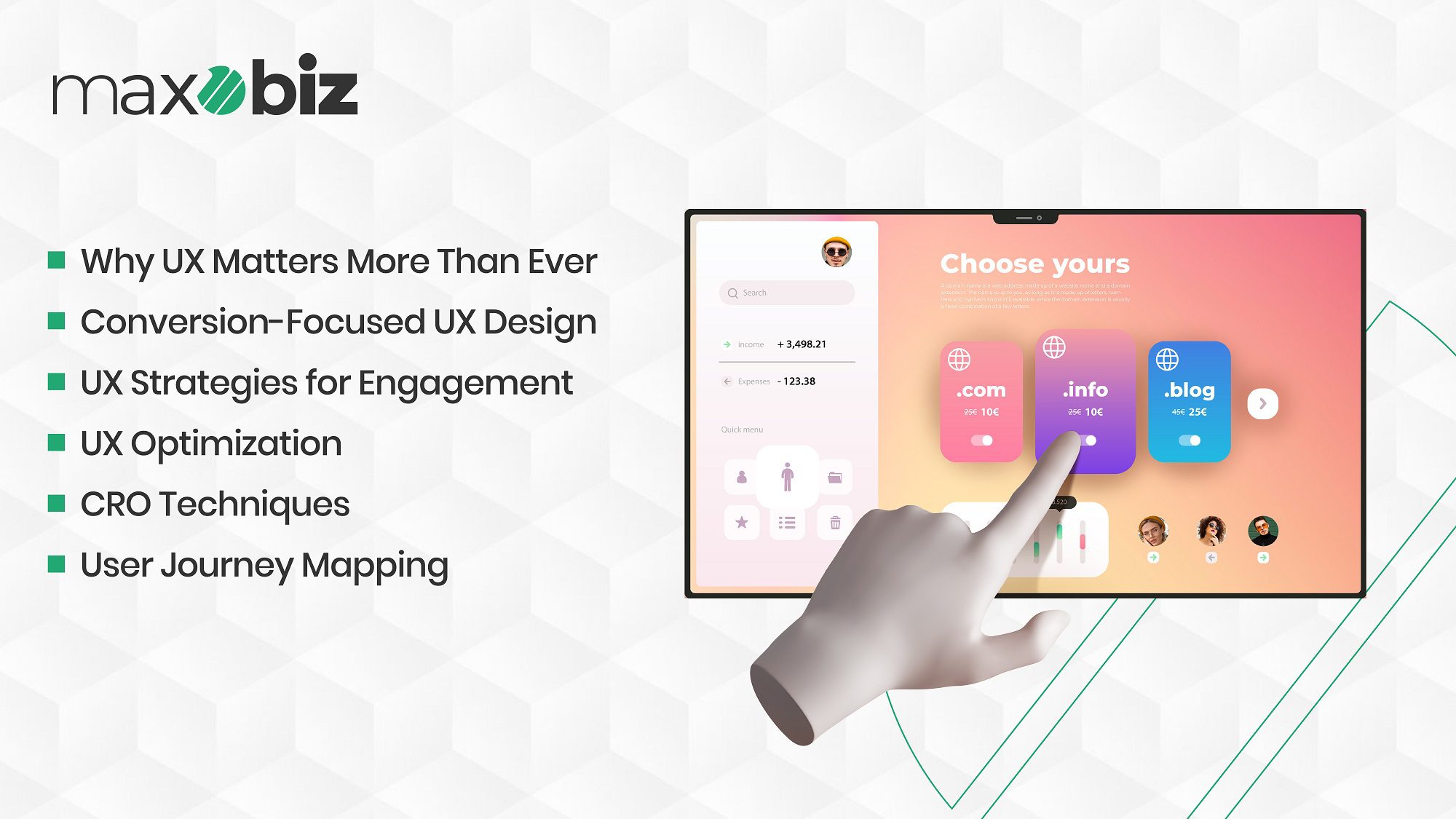
Conversion-Focused UX Design: Crafting a Path to Success
[su_spacer size=”30″]
When we talk about conversion-focused UX design, we’re talking about creating a user experience specifically designed to guide visitors toward making a conversion, whether that’s buying a product, signing up for a newsletter, or downloading an app. This kind of design involves understanding what drives your users and using that knowledge to create a pathway that leads them straight to your goals.
[su_spacer size=”30″]
Related Article: Top UX Design Trends That Every Business Should Follow
[su_spacer size=”30″]
Clear CTAs: Your call-to-action buttons are your gateways to conversion. Make them impossible to ignore with vibrant colors and persuasive text.
[su_spacer size=”30″]
Streamlined Navigation: Don’t let your users get lost. A clean, intuitive navigation layout helps them find what they need, fast.
[su_spacer size=”30″]
Speed and Simplicity: A fast-loading page removes barriers to conversion. Keep designs simple and focus on speed to keep your users happy and engaged.
[su_spacer size=”30″]
Also Read: The Role of UX/UI Design in Creating Engaging Websites
UX Strategies for Engagement: Keeping Users Hooked
[su_spacer size=”30″]
Engagement is the secret to retaining users and turning them into loyal customers. UX strategies for engagement are all about making your website not just usable, but delightful to use. Here are some killer strategies to keep users engaged:
[su_spacer size=”30″]
Interactive Elements: Incorporate interactive elements like hover effects, animations, and dynamic content that responds to user actions. Like the animation on the home page of Maxobiz These features can transform passive browsing into an active, engaging experience.
[su_spacer size=”30″]
Feedback Loops: Use immediate feedback for user actions, like a color change when a button is clicked, to make the experience feel responsive and real.
[su_spacer size=”30″]
Personalization: Offer personalized experiences based on user behavior. If they’re returning visitors, display a welcoming message or suggest products based on their past browsing history.
[su_spacer size=”30″]
User Experience (UX) Optimization: Turning Good Into Great
[su_spacer size=”30″]
Now, let’s optimize! User experience optimization means refining your website’s UX to perform at its peak. It’s about constant improvement and adapting to user needs. Here’s how you can optimize:
[su_spacer size=”30″]
User Testing: Regularly test your website with real users to find pain points and opportunities for improvement.
[su_spacer size=”30″]
Analytics: Use tools like Google Analytics to track where you’re losing users and test different strategies to keep them.
[su_spacer size=”30″]
Adaptive Design: Ensure your site looks great and works well on all devices, especially mobiles, as a significant portion of web traffic is mobile.
[su_spacer size=”30″]
CRO Techniques and Effective UX/UI Practices
[su_spacer size=”30″]
Conversion Rate Optimization (CRO) is all about getting more of your visitors to do what you want them to do. Here are some effective CRO techniques:
[su_spacer size=”30″]
A/B Testing: Test two versions of a page to see which performs better. Small changes, like the color of a button or the placement of a form, can have big impacts.
[su_spacer size=”30″]
Segmentation: Tailor your UX to different segments of your audience. Different users may prefer different types of content, layouts, or interaction styles.
[su_spacer size=”30″]
Heatmaps: Use heatmaps to see where users are clicking most often. This can help you understand what catches their attention.
[su_spacer size=”30″]
User Journey Mapping and Persuasive Design Techniques
[su_spacer size=”30″]
Mapping out the user journey helps you visualize a visitor’s path through your site, from the first interaction to the final conversion. This is crucial for identifying roadblocks and smoothing out the experience.
[su_spacer size=”30″]
Empathy Maps: Build empathy maps to better understand your users’ needs and emotions throughout their journey.
[su_spacer size=”30″]
Storytelling: Use storytelling in your UX to create a narrative around your products or services. This makes the journey more compelling and memorable.
[su_spacer size=”30″]
Conclusion: The Road Ahead
[su_spacer size=”30″]
Mastering UX design for conversion is an ongoing journey. Your website needs to keep pace with the fast-changing digital world. Remember, the goal is to make your user’s experience so delightful and seamless that conversion becomes a natural step in their journey. Focusing on these UX strategies can significantly boost user engagement and drive more conversions.
[su_spacer size=”30″]
Isn’t it amazing how much thoughtful design can impact user engagement and conversions? What’s one change you could make today to improve your website’s UX?
[su_spacer size=”30″]